
Boosting Your Spatial Awareness
- Florence DEMOURANT
- 11 mai 2025
- 2 min de lecture

Spatial awareness is a particularly important topic when it comes to autism. Beyond bumping into things, it’s actually a concept that can cause a great deal of anxiety—often without you even realising it.
Take travelling, for example. Not being able to picture the route, the location, or the distance between places can silently add to your overall stress.
The good news? Spatial awareness is a skill you can train. And working on it also improves your ability to see the bigger picture—which is another common challenge in autism. So here are a few ideas to help you strengthen your spatial awareness.
Draw Maps and Floor Plans
Whether it’s of your home, a place you love, or a completely imaginary location, drawing floor plans is an excellent way to practise spatial projection and big-picture thinking. You don’t need to be a great artist—basic 2D sketches with lines and symbols are enough. But if you have a creative streak, don’t hesitate to make it something beautiful.
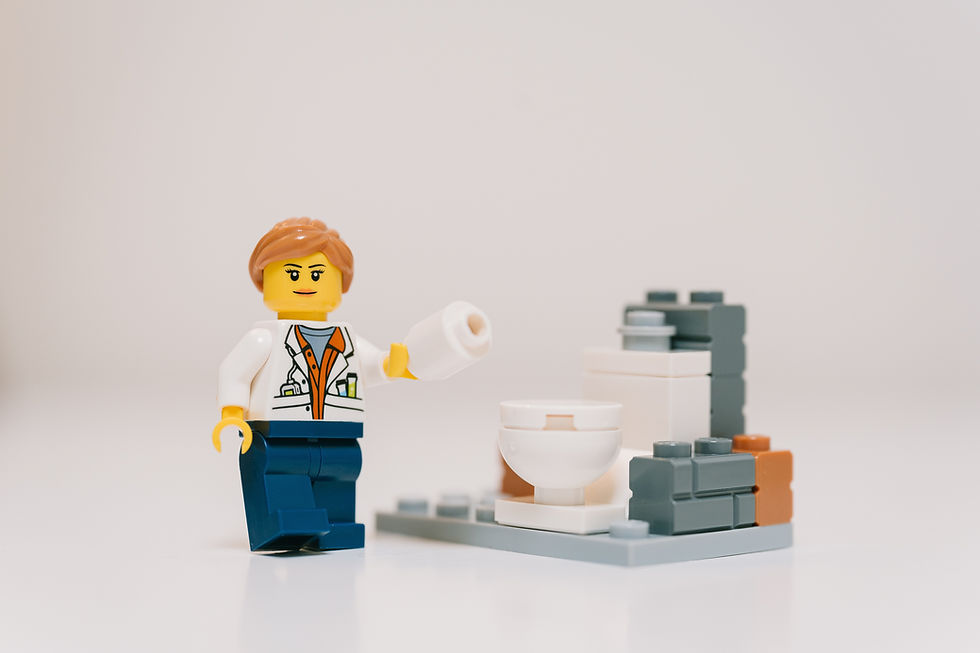
Build Lego Sets
Okay—I’m not sponsored by Lego (though... they really could send me a few free sets 😅), but Lego is an incredible tool for the autistic brain.
When you begin a set, you often have no idea what the piece you're building will eventually become. That forces the autistic brain to let go and embrace the uncertainty of each step for the sake of the bigger picture. Then there’s the instruction manual—switching between the page and the real-world construction is an incredibly effective way to develop spatial awareness. But that’s not all!

Doing it with someone else? That introduces planning, cooperation, and focus.
Need another reason? It’s fun! And no matter what your special interest is, you’re bound to find a Lego set that matches your theme.
Pixel Art (Using Printable Templates)
Pixel art is a simple way to work on spatial awareness. All you need is a pen, some graph paper, and a bit of time. The best approach is to follow pre-made templates. Inventing your own boosts creativity, of course—but it’s much less effective for developing spatial awareness.
By following a pattern—especially one that involves different square sizes—you’ll be training your brain to identify reference points and adapt spatially to something abstract, before it’s fully formed.
Here are a few printable templates 👇


In short, spatial awareness is one of the autism-related challenges that responds best to training. Whether through these activities, through sport, or any hobby that engages this skill—you’ll soon notice real progress 💪


Commentaires